
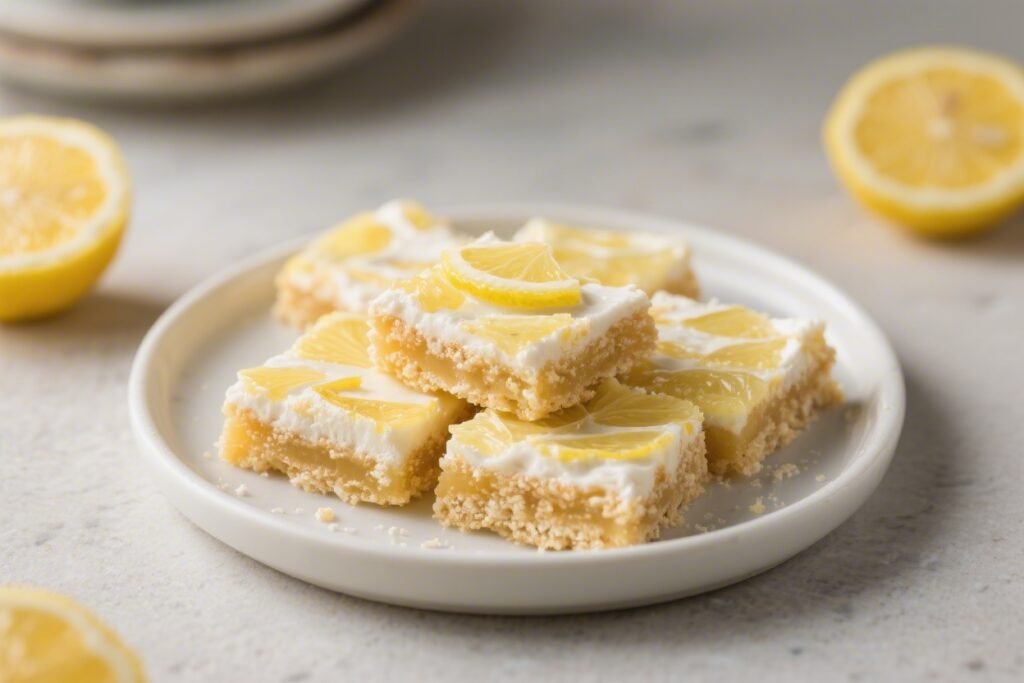
These low carb lemon bars bring bright citrus flavor and a creamy, custardy bite without the sugar crash. The crust is buttery and nutty, and the filling is silky with just the right amount of tang. They’re easy enough for a weeknight bake but special enough for a brunch table.
If you love lemon desserts but want to keep carbs in check, this recipe hits the sweet spot. You’ll get balanced flavor, clean slices, and a dessert that tastes like sunshine.
Low Carb Lemon Bars - Bright, Zesty, and Satisfyingly Simple
Ingredients
- Almond flour (finely ground; not almond meal)
- Unsalted butter
- Granulated erythritol, allulose, or a monk fruit blend (1:1 sugar replacement)
- Eggs
- Fresh lemons (for juice and zest)
- Vanilla extract (optional, for warmth)
- Sea salt
- Coconut flour (optional, for extra structure)
- Powdered low carb sweetener (for dusting; optional)
- Baking spray or parchment (to line the pan)
Instructions
- Preheat and prep the pan: Set your oven to 350°F (175°C). Line an 8x8-inch baking pan with parchment, leaving a slight overhang for easy lifting. Lightly grease the sides.
- Mix the crust: In a bowl, combine 2 cups almond flour, 1/3 cup granulated low carb sweetener, and a pinch (1/4 tsp) sea salt. Stir in 1/2 cup melted unsalted butter and 1/2 teaspoon vanilla extract until the dough is evenly moistened and clumps together.
- Press and par-bake: Press the crust mixture firmly into the lined pan, creating an even layer. Dock with a fork a few times. Bake for 12–14 minutes until lightly golden at the edges. Set aside to cool slightly.
- Whisk the filling: In a clean bowl, whisk together 3 large eggs, 2/3 cup granulated low carb sweetener, 1/2 cup fresh lemon juice (about 3–4 lemons), 1 tablespoon lemon zest, and a pinch of salt. For extra body, whisk in 1 tablespoon coconut flour. The batter should be smooth and pourable.
- Pour and bake: Pour the filling over the warm crust. Reduce oven temperature to 325°F (165°C). Bake for 18–22 minutes, or until the center is just set with a slight jiggle when you nudge the pan.
- Cool completely: Let the bars cool in the pan on a rack until room temperature. Then chill for at least 2 hours. This step firms the custard and makes slicing clean and easy.
- Dust and slice: Lift the bars out using the parchment. Dust with powdered low carb sweetener if you like. Slice into 16 squares with a sharp knife, wiping the blade between cuts for tidy edges.
- Serve: Enjoy chilled or at cool room temperature. Expect a bright, lemony bite with a tender, buttery crust.
Why This Recipe Works
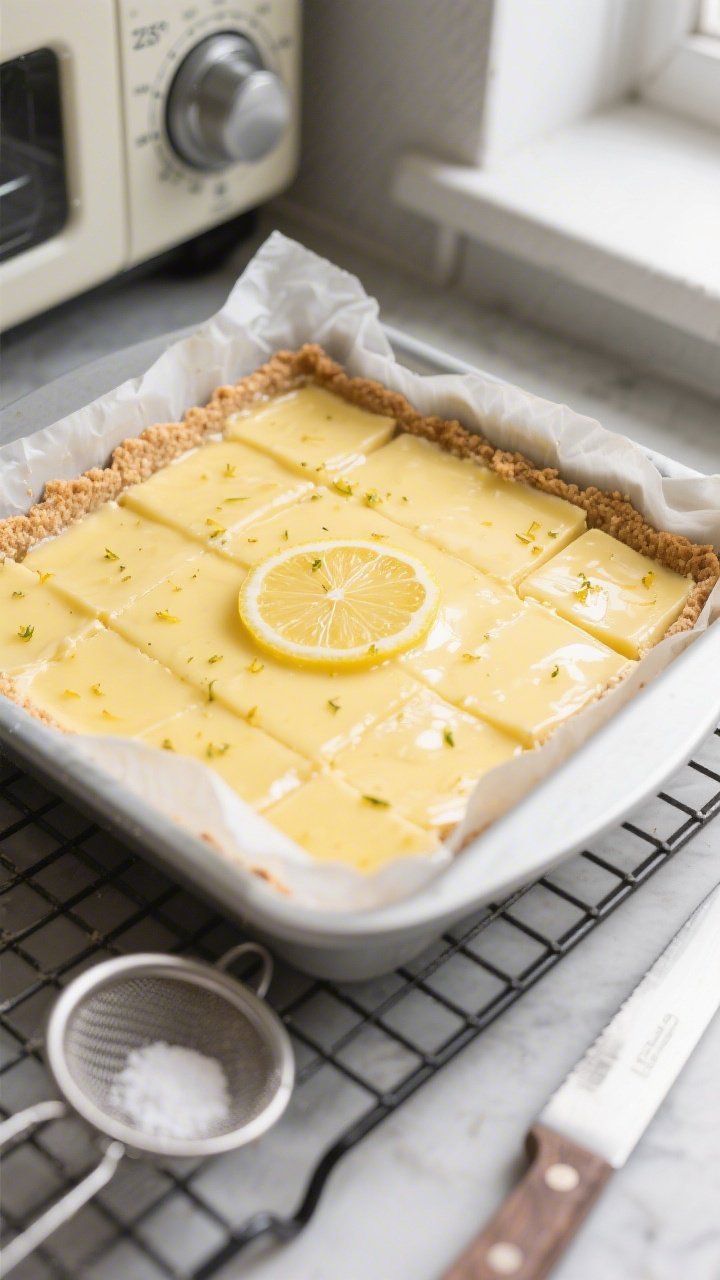
These bars swap traditional flour and sugar with low carb staples that still deliver great texture. The almond flour crust bakes up tender and slightly crisp, providing a sturdy base that won’t crumble.
The lemon filling uses a blend of fresh lemon juice, zest, and a heat-stable sweetener to maintain a smooth, custard-like finish without graininess. A short chill after baking ensures clean cuts and bright, balanced flavor. It’s fuss-free, reliable, and genuinely delicious.
Shopping List
- Almond flour (finely ground; not almond meal)
- Unsalted butter
- Granulated erythritol, allulose, or a monk fruit blend (1:1 sugar replacement)
- Eggs
- Fresh lemons (for juice and zest)
- Vanilla extract (optional, for warmth)
- Sea salt
- Coconut flour (optional, for extra structure)
- Powdered low carb sweetener (for dusting; optional)
- Baking spray or parchment (to line the pan)
Step-by-Step Instructions
- Preheat and prep the pan: Set your oven to 350°F (175°C).
Line an 8×8-inch baking pan with parchment, leaving a slight overhang for easy lifting. Lightly grease the sides.
- Mix the crust: In a bowl, combine 2 cups almond flour, 1/3 cup granulated low carb sweetener, and a pinch (1/4 tsp) sea salt. Stir in 1/2 cup melted unsalted butter and 1/2 teaspoon vanilla extract until the dough is evenly moistened and clumps together.
- Press and par-bake: Press the crust mixture firmly into the lined pan, creating an even layer.
Dock with a fork a few times. Bake for 12–14 minutes until lightly golden at the edges. Set aside to cool slightly.
- Whisk the filling: In a clean bowl, whisk together 3 large eggs, 2/3 cup granulated low carb sweetener, 1/2 cup fresh lemon juice (about 3–4 lemons), 1 tablespoon lemon zest, and a pinch of salt.
For extra body, whisk in 1 tablespoon coconut flour. The batter should be smooth and pourable.
- Pour and bake: Pour the filling over the warm crust. Reduce oven temperature to 325°F (165°C).
Bake for 18–22 minutes, or until the center is just set with a slight jiggle when you nudge the pan.
- Cool completely: Let the bars cool in the pan on a rack until room temperature. Then chill for at least 2 hours. This step firms the custard and makes slicing clean and easy.
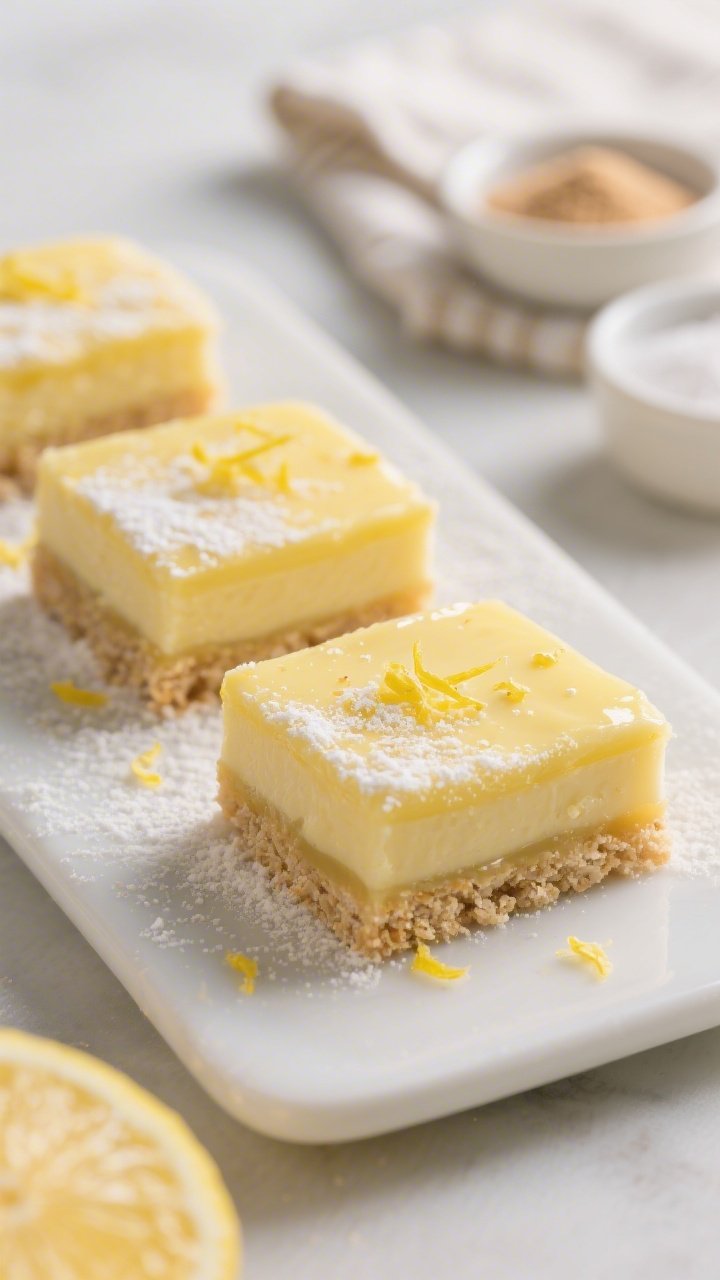
- Dust and slice: Lift the bars out using the parchment.
Dust with powdered low carb sweetener if you like. Slice into 16 squares with a sharp knife, wiping the blade between cuts for tidy edges.
- Serve: Enjoy chilled or at cool room temperature. Expect a bright, lemony bite with a tender, buttery crust.
Keeping It Fresh
Store the bars in an airtight container in the fridge for up to 5 days.
Separate layers with parchment to prevent sticking. For longer storage, freeze individual bars on a sheet pan until solid, then transfer to a freezer bag for up to 2 months. Thaw in the fridge overnight or at room temperature for about 30 minutes.
Avoid leaving them out for hours; the custard can soften and lose its clean texture.
Benefits of This Recipe
- Low in net carbs: Almond flour and a zero- or low-calorie sweetener keep total carbs in check without sacrificing flavor.
- Naturally gluten-free: No wheat flour, making it a great option for gluten-sensitive eaters.
- Bright, real lemon flavor: Fresh juice and zest give it a true citrus punch, not a flat or artificial taste.
- Make-ahead friendly: The bars actually taste better after chilling, and they freeze well.
- Balanced texture: A crisp-tender crust with a smooth, custardy top means every bite feels satisfying.
Common Mistakes to Avoid
- Overbaking the filling: If you wait for the center to look completely firm in the oven, it will be dry after cooling. Pull it when it still has a slight jiggle.
- Skipping the chill: Cutting too soon leads to messy slices. Chilling sets the custard and sharpens the lemon flavor.
- Using almond meal: Coarser almond meal can make the crust grainy.
Choose finely ground almond flour for a better texture.
- Not drying the crust edge: Failing to par-bake the crust can cause a soggy base. Give it time to lightly brown before adding filling.
- Sweetener swap issues: Some sweeteners crystallize or taste cooling. If you’re sensitive to that, allulose or a monk fruit-allulose blend typically bakes up smoother.
Variations You Can Try
- Meyer lemon twist: Use Meyer lemons for a softer, floral tartness.
You may need slightly less sweetener.
- Coconut-almond crust: Swap 1/3 cup of the almond flour for unsweetened shredded coconut for extra chew and aroma.
- Lavender lemon: Steep 1/2 teaspoon culinary lavender in the warm lemon juice for 10 minutes, strain, then proceed for a delicate herbal note.
- Lemon-berry swirl: Dot the filling with a few teaspoons of mashed raspberries (sweeten lightly) and swirl with a toothpick before baking.
- Extra tang: Add 1–2 teaspoons of lemon zest to the crust as well as the filling for a bolder citrus hit.
FAQ
Can I use coconut flour instead of almond flour for the crust?
Not directly. Coconut flour is highly absorbent and behaves differently. If you must, use a tested coconut flour crust recipe.
Otherwise, stick with almond flour for reliable results.
Which sweetener works best for lemon bars?
Allulose gives the smoothest, least-grainy texture and no cooling effect. Erythritol or monk fruit blends work well too, but may crystallize slightly. Powdered versions reduce grittiness.
How do I get the bars extra yellow?
Use very fresh yolks and plenty of zest.
If you want a brighter hue without changing flavor, a tiny pinch of turmeric can add warmth, but use sparingly.
My filling cracked. What went wrong?
Overbaking or a too-hot oven can cause cracks. Bake at 325°F and pull when the center still jiggles.
Cooling gradually on the counter before chilling also helps.
Can I make these dairy-free?
Yes. Replace butter with refined coconut oil or a neutral dairy-free butter. Expect a slightly different flavor and a slightly firmer crust when chilled.
How do I prevent the crust from sticking?
Line the pan with parchment and leave overhang for lifting.
Lightly grease the parchment and sides. Let the bars cool fully before removing.
What size pan should I use?
An 8×8-inch pan gives thick, satisfying bars. A 9×9-inch pan works but yields thinner bars; reduce baking time slightly and watch closely.
Can I reduce the sweetener?
Yes, but keep some sweetness to balance the lemon’s acidity.
Start by reducing 2–3 tablespoons and taste the filling before baking.
Do these fit into a keto diet?
Generally, yes. With almond flour and low carb sweetener, net carbs per bar stay low. Always calculate based on your exact ingredients and serving size.
How long should they chill?
At least 2 hours for clean cuts and the best texture.
Overnight is even better for flavor development and easy serving.
Wrapping Up
These low carb lemon bars deliver everything you want from a classic lemon dessert—bright flavor, creamy texture, and a crisp, buttery base—without the sugar load. They’re dependable, easy to make, and perfect for sharing. Keep a batch in the fridge for afternoon pick-me-ups, or bring them to your next get-together and watch them disappear.
Simple ingredients, smart swaps, and big citrus payoff. That’s a win all around.