
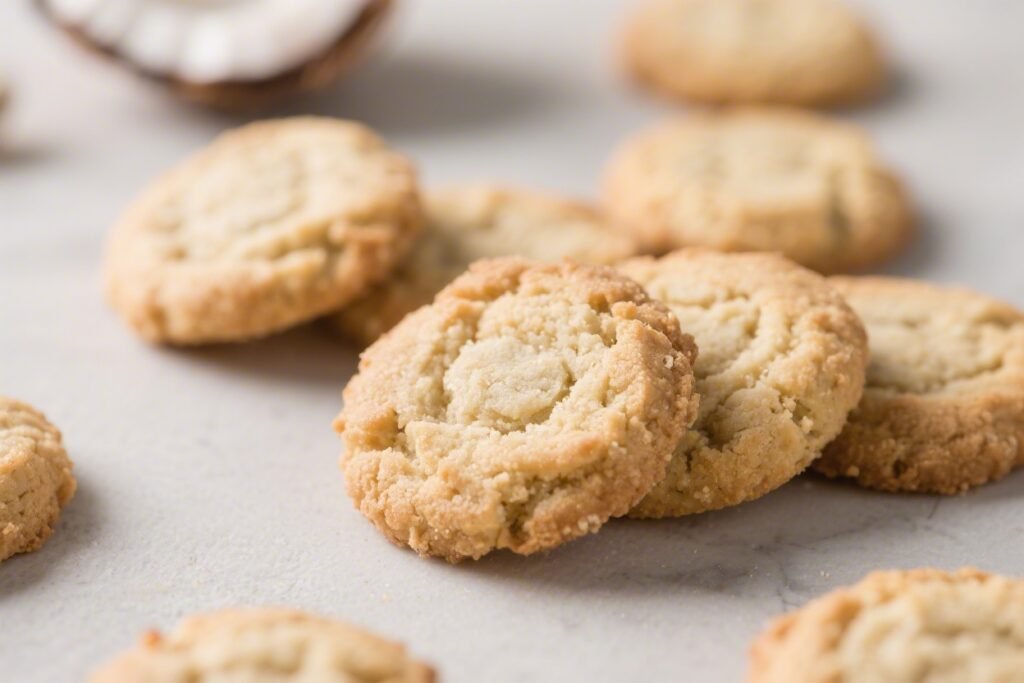
These Low Carb Coconut Flour Cookies are the kind of treat you can whip up on a weeknight and feel good about. They’re soft, lightly sweet, and perfect with a cup of coffee or tea. If you’re easing off sugar or watching your carbs, these cookies hit that nostalgic spot without the crash.
They come together quickly with pantry staples, and the dough is very forgiving. You’ll get a tender crumb, a hint of coconut, and just enough vanilla and cinnamon to make them cozy.

Low Carb Coconut Flour Cookies - Soft, Chewy, and Easy to Make
Ingredients
- Coconut flour – 1/2 cup, sifted. It’s very absorbent and gives structure.
- Almond flour – 1/4 cup, blanched. Adds tenderness and balances texture.
- Granulated low-carb sweetener – 1/3 to 1/2 cup (erythritol, allulose, or a blend that measures like sugar).
- Butter – 6 tablespoons, softened. For richness and moisture. Use coconut oil for dairy-free.
- Eggs – 2 large. They bind the dough and help it rise slightly.
- Vanilla extract – 1 1/2 teaspoons. Adds warmth and cookie flavor.
- Ground cinnamon – 1/2 teaspoon. Optional, but lovely with coconut.
- Baking powder – 1/2 teaspoon. Gives a gentle lift.
- Salt – 1/4 teaspoon. Balances sweetness and brightens flavor.
- Unsweetened shredded coconut – 1/4 cup. Optional for texture and coconut flavor.
- Milk of choice – 1–2 tablespoons as needed (almond milk or dairy). Helps adjust dough consistency.
Instructions
- Preheat and prep: Heat your oven to 350°F (175°C). Line a baking sheet with parchment paper.
- Mix dry ingredients: In a bowl, whisk coconut flour, almond flour, baking powder, cinnamon, and salt. Break up any clumps.
- Cream the butter and sweetener: In a separate bowl, beat the softened butter with the sweetener until light and fluffy, about 1–2 minutes. This helps with texture.
- Add eggs and vanilla: Beat in the eggs one at a time, then add vanilla. The mixture may look slightly curdled—totally fine.
- Combine: Add the dry ingredients to the wet. Stir until a thick dough forms. If adding shredded coconut, fold it in now.
- Adjust moisture: If the dough seems dry or crumbly, add milk 1 teaspoon at a time until it holds together easily. Coconut flour is thirsty—go slow.
- Portion and shape: Scoop dough into 1–1.5 tablespoon balls. Place on the lined sheet and gently flatten to about 1/2 inch thick. These cookies don’t spread much.
- Bake: Bake for 10–12 minutes, until the edges are just set and lightly golden. The centers should still look soft.
- Cool: Let the cookies cool on the baking sheet for 10 minutes before moving them to a rack. They firm up as they cool.
What Makes This Special
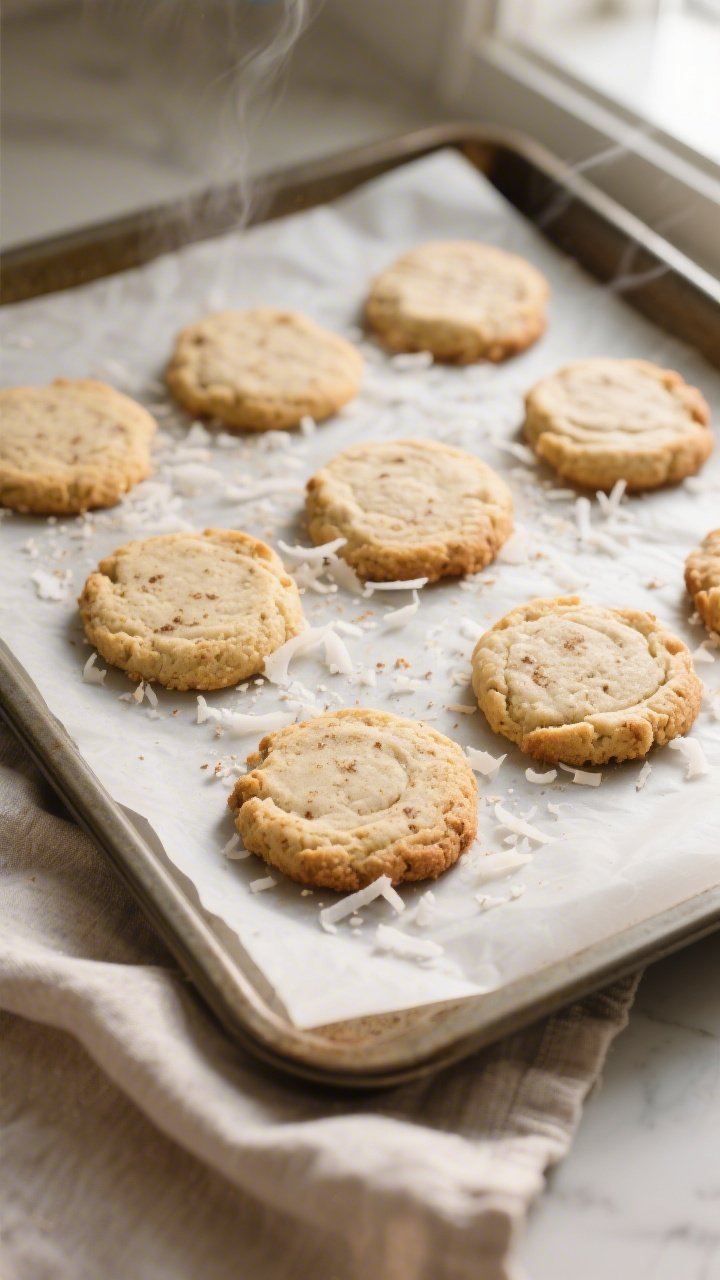
These cookies use coconut flour, which is naturally low in carbs, grain-free, and full of fiber. That means a little goes a long way—and you get a soft, cake-like cookie that still feels indulgent.
We use a granulated, zero-calorie sweetener that measures like sugar, so you can keep the sweetness without the spike. With a simple ingredient list and no fancy tools required, this recipe is great for beginners. Plus, the dough is versatile: add a handful of sugar-free chocolate chips, chopped nuts, or a pinch of citrus zest to switch things up.
What You’ll Need
- Coconut flour – 1/2 cup, sifted.
It’s very absorbent and gives structure.
- Almond flour – 1/4 cup, blanched. Adds tenderness and balances texture.
- Granulated low-carb sweetener – 1/3 to 1/2 cup (erythritol, allulose, or a blend that measures like sugar).
- Butter – 6 tablespoons, softened. For richness and moisture.
Use coconut oil for dairy-free.
- Eggs – 2 large. They bind the dough and help it rise slightly.
- Vanilla extract – 1 1/2 teaspoons. Adds warmth and cookie flavor.
- Ground cinnamon – 1/2 teaspoon.
Optional, but lovely with coconut.
- Baking powder – 1/2 teaspoon. Gives a gentle lift.
- Salt – 1/4 teaspoon. Balances sweetness and brightens flavor.
- Unsweetened shredded coconut – 1/4 cup.
Optional for texture and coconut flavor.
- Milk of choice – 1–2 tablespoons as needed (almond milk or dairy). Helps adjust dough consistency.
How to Make It

- Preheat and prep: Heat your oven to 350°F (175°C). Line a baking sheet with parchment paper.
- Mix dry ingredients: In a bowl, whisk coconut flour, almond flour, baking powder, cinnamon, and salt.
Break up any clumps.
- Cream the butter and sweetener: In a separate bowl, beat the softened butter with the sweetener until light and fluffy, about 1–2 minutes. This helps with texture.
- Add eggs and vanilla: Beat in the eggs one at a time, then add vanilla. The mixture may look slightly curdled—totally fine.
- Combine: Add the dry ingredients to the wet.
Stir until a thick dough forms. If adding shredded coconut, fold it in now.
- Adjust moisture: If the dough seems dry or crumbly, add milk 1 teaspoon at a time until it holds together easily. Coconut flour is thirsty—go slow.
- Portion and shape: Scoop dough into 1–1.5 tablespoon balls.
Place on the lined sheet and gently flatten to about 1/2 inch thick. These cookies don’t spread much.
- Bake: Bake for 10–12 minutes, until the edges are just set and lightly golden. The centers should still look soft.
- Cool: Let the cookies cool on the baking sheet for 10 minutes before moving them to a rack.
They firm up as they cool.
Keeping It Fresh
Once fully cooled, store cookies in an airtight container at room temperature for 3–4 days. For longer storage, refrigerate for up to a week. They also freeze well: layer them with parchment in a freezer-safe container and freeze for up to 2 months.
Thaw at room temp or warm briefly in a 300°F (150°C) oven for 3–4 minutes to refresh the texture.
Benefits of This Recipe
- Low in carbs, high in fiber: Coconut flour keeps net carbs lower while adding fiber for fullness.
- Gluten-free and grain-free: Great for those avoiding wheat or grains.
- Quick and simple: From mixing bowl to oven in about 10 minutes.
- Customizable: Easy to adapt with mix-ins or spices without changing the base too much.
- Satisfying texture: Soft and slightly chewy with a gentle crumb that doesn’t taste “diet.”
Common Mistakes to Avoid
- Using too much coconut flour: It’s ultra-absorbent. Measure carefully and level the cup. A little extra can make dry, crumbly cookies.
- Skipping the moisture adjustment: If the dough is dry, add a bit of milk.
If it’s too wet, rest the dough for 3–5 minutes to let the flour hydrate.
- Overbaking: These cookies can dry out fast. Pull them when edges are set and centers still look soft.
- Expecting spread: Low-carb doughs don’t spread like classic sugar-butter cookies. Flatten before baking.
- Using the wrong sweetener: Granulated blends that measure like sugar work best.
Pure stevia drops won’t give the right structure on their own.
Alternatives
- Dairy-free: Swap butter with refined coconut oil or a neutral dairy-free butter. Add a pinch more salt for balance.
- Flavor twists: Lemon zest and a squeeze of juice; almond extract with sliced almonds; or pumpkin spice instead of cinnamon.
- Mix-ins: Sugar-free chocolate chips, chopped pecans, or toasted coconut flakes. Keep add-ins to about 1/3 cup total.
- Sweetener swaps: Allulose gives a softer cookie and browns more; erythritol stays crisper and cooler on the palate; monk fruit blends are a nice middle ground.
- Egg-free: Try two flax “eggs” (2 tablespoons ground flax + 6 tablespoons water, rested 10 minutes).
The texture will be a bit denser but still tasty.
FAQ
Do these cookies taste strongly of coconut?
They have a light coconut note from the flour, but it’s not overwhelming. If you add shredded coconut, the flavor becomes more pronounced. Vanilla and cinnamon help round it out.
Can I use only coconut flour and skip the almond flour?
Yes, but you’ll need to adjust.
Use a touch less coconut flour (about 2 extra teaspoons milk) and expect a slightly drier, cake-like texture. The almond flour adds tenderness that balances the crumb.
Which sweetener works best?
A granulated sweetener that measures like sugar works best. Allulose gives the softest result, erythritol keeps more bite, and blends often land in the middle.
Taste your dough and adjust to your preference.
Why is my dough crumbly?
Coconut flour absorbs moisture fast. Add milk a teaspoon at a time until the dough holds when pressed. Also make sure your butter is softened and your eggs are large.
How do I make the cookies crispier?
Flatten them a bit thinner, bake toward the longer end of the time, and let them cool completely on a rack.
Using more erythritol can also help with a crisper finish.
Can I double the recipe?
Absolutely. Coconut flour can vary by brand, so when scaling up, mix everything and then adjust with a splash of milk if needed. Bake in batches for best results.
What’s the best way to freeze the dough?
Shape the dough into flattened discs, freeze on a tray until firm, then transfer to a freezer bag.
Bake from frozen at 350°F (175°C), adding 1–2 extra minutes as needed.
Are these keto-friendly?
Yes, if you use a keto-friendly sweetener and keep mix-ins low-carb. Check your sweetener label for net carbs and adjust portion size to fit your goals.
Final Thoughts
Low Carb Coconut Flour Cookies are simple, dependable, and easy to tailor to your taste. With a short ingredient list and quick bake time, they’re perfect for everyday cravings.
Keep a batch on hand for snacks, lunchboxes, or a calm evening treat. Once you get the feel for the dough, you can customize it endlessly—and still keep it low carb. Enjoy them warm, with your favorite drink, and you won’t miss the sugar one bit.