

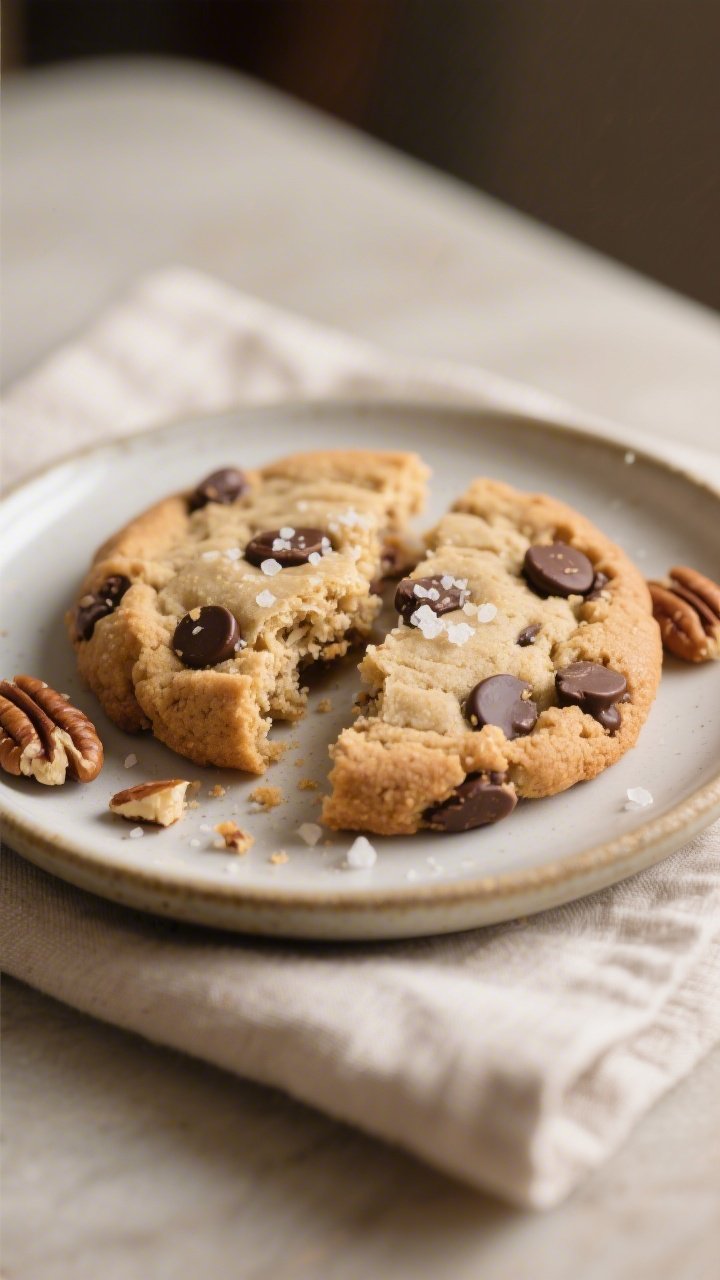
These Keto Chocolate Chip Cookies are the kind you’ll want to keep a batch of on the counter. They’re soft in the center, slightly crisp at the edges, and full of melty chocolate chips—without the sugar crash. If you’ve been missing classic chocolate chip cookies on a low-carb lifestyle, this recipe brings that comfort back.
You’ll get familiar pantry ingredients, quick prep, and reliable results. No weird texture, no chalky aftertaste—just a cookie that tastes like a cookie.

Keto Chocolate Chip Cookies - Soft, Chewy, and Low-Carb
Ingredients
- Almond flour (super-fine, blanched)
- Coconut flour
- Brown-style erythritol or allulose blend (keto-friendly)
- Unsalted butter
- Large egg
- Vanilla extract
- Baking powder
- Fine sea salt
- Sugar-free chocolate chips (dark or semi-sweet style)
- Optional: Liquid stevia or monk fruit drops (for a touch more sweetness)
- Optional: Chopped walnuts or pecans
- Optional: Flaky sea salt for finishing
Instructions
- Set up and preheat. Heat your oven to 350°F (175°C). Line a baking sheet with parchment paper to prevent sticking.
- Soften the butter. Let 1/2 cup (1 stick) unsalted butter sit at room temperature until easily dented with a finger. Soft butter creams better and traps air for a lighter texture.
- Cream the butter and sweetener. In a mixing bowl, beat the softened butter with 1/2 cup brown-style keto sweetener until light and fluffy, 1–2 minutes. This step helps build structure and improves mouthfeel.
- Add egg and vanilla. Beat in 1 large egg and 1 teaspoon vanilla extract until smooth. If you like a chewier cookie, add 1 extra egg yolk here.
- Combine dry ingredients. In a separate bowl, whisk 2 cups super-fine almond flour, 1 tablespoon coconut flour, 1/2 teaspoon baking powder, and 1/4 teaspoon fine sea salt. The coconut flour soaks up extra moisture and prevents greasiness.
- Mix the dough. Add the dry mix to the wet ingredients. Stir until just combined. If the dough seems too soft, let it rest 2–3 minutes; coconut flour thickens as it hydrates.
- Fold in chocolate. Stir in 1/2 to 3/4 cup sugar-free chocolate chips. For balanced distribution, use a mix of minis and regular chips. Add nuts if using.
- Chill briefly. Cover and refrigerate for 20–30 minutes. Chilling helps prevent spreading and gives you thicker, softer cookies.
- Scoop and shape. Use a 1.5-tablespoon scoop to portion onto the lined sheet, spacing 2 inches apart. Gently flatten the tops with your fingertips; almond flour cookies don’t spread as much as wheat-based ones.
- Bake. Bake 9–12 minutes, until edges are set and lightly golden but centers still look a touch soft. Do not overbake—carryover heat will finish them.
- Finish and cool. If you like, sprinkle a pinch of flaky sea salt over the tops while hot. Let cookies cool on the sheet for 10 minutes before transferring to a rack. They firm up as they cool.
Why This Recipe Works

- Almond flour creates a tender, bakery-style crumb without grains or gluten. It mimics the richness of traditional flour and keeps the texture soft.
- Brown-style keto sweetener adds depth and chew.
It melts into the dough like real brown sugar and gives those classic caramel notes.
- Butter and an egg yolk boost moisture and richness, keeping the cookies from turning dry or crumbly.
- Dark sugar-free chocolate chips deliver real chocolate flavor without the carbs. A mix of minis and regular chips helps with even distribution.
- Chilling the dough helps the cookies hold shape and improves texture, giving you that soft middle and lightly crisp edge.
Shopping List
- Almond flour (super-fine, blanched)
- Coconut flour
- Brown-style erythritol or allulose blend (keto-friendly)
- Unsalted butter
- Large egg
- Vanilla extract
- Baking powder
- Fine sea salt
- Sugar-free chocolate chips (dark or semi-sweet style)
- Optional: Liquid stevia or monk fruit drops (for a touch more sweetness)
- Optional: Chopped walnuts or pecans
- Optional: Flaky sea salt for finishing
Step-by-Step Instructions
- Set up and preheat. Heat your oven to 350°F (175°C). Line a baking sheet with parchment paper to prevent sticking.
- Soften the butter. Let 1/2 cup (1 stick) unsalted butter sit at room temperature until easily dented with a finger.
Soft butter creams better and traps air for a lighter texture.
- Cream the butter and sweetener. In a mixing bowl, beat the softened butter with 1/2 cup brown-style keto sweetener until light and fluffy, 1–2 minutes. This step helps build structure and improves mouthfeel.
- Add egg and vanilla. Beat in 1 large egg and 1 teaspoon vanilla extract until smooth. If you like a chewier cookie, add 1 extra egg yolk here.
- Combine dry ingredients. In a separate bowl, whisk 2 cups super-fine almond flour, 1 tablespoon coconut flour, 1/2 teaspoon baking powder, and 1/4 teaspoon fine sea salt.
The coconut flour soaks up extra moisture and prevents greasiness.
- Mix the dough. Add the dry mix to the wet ingredients. Stir until just combined. If the dough seems too soft, let it rest 2–3 minutes; coconut flour thickens as it hydrates.
- Fold in chocolate. Stir in 1/2 to 3/4 cup sugar-free chocolate chips.
For balanced distribution, use a mix of minis and regular chips. Add nuts if using.
- Chill briefly. Cover and refrigerate for 20–30 minutes. Chilling helps prevent spreading and gives you thicker, softer cookies.
- Scoop and shape. Use a 1.5-tablespoon scoop to portion onto the lined sheet, spacing 2 inches apart. Gently flatten the tops with your fingertips; almond flour cookies don’t spread as much as wheat-based ones.
- Bake. Bake 9–12 minutes, until edges are set and lightly golden but centers still look a touch soft.
Do not overbake—carryover heat will finish them.
- Finish and cool. If you like, sprinkle a pinch of flaky sea salt over the tops while hot. Let cookies cool on the sheet for 10 minutes before transferring to a rack. They firm up as they cool.
Storage Instructions
- Room temperature: Store in an airtight container for up to 3 days.
Add a small piece of parchment between layers to prevent sticking.
- Refrigerator: Keeps well for 1 week. Chilling slightly intensifies flavor and chew.
- Freezer: Freeze baked cookies for up to 2 months. Thaw at room temp or warm for 5 minutes in a 300°F (150°C) oven.
- Freeze the dough: Scoop dough balls onto a tray, freeze solid, then bag.
Bake from frozen at 350°F (175°C), adding 1–2 extra minutes.
Benefits of This Recipe
- Low in net carbs: Almond flour and keto sweeteners keep carbs down while still delivering classic cookie flavor.
- No grain or gluten: Friendly for gluten-free eaters and many low-carb plans.
- Easy and quick: The dough comes together in one bowl, and bake time is short.
- Customizable: Adjust sweetness, add nuts, or change chip style to suit your taste.
- Great texture: Chewy middle, soft crumb, and light crisp edges—no sandy or rubbery bite.
Common Mistakes to Avoid
- Skipping the chill: Warm dough spreads too much and bakes up thin. A short chill keeps the cookies thick and tender.
- Packing almond flour: Scooping directly from the bag compacts it. Fluff with a fork, then spoon-and-level for accurate measuring.
- Overbaking: They may look slightly underdone at the center—this is perfect.
Overbaking leads to dry, crumbly cookies.
- Using granular erythritol only: Straight erythritol can crystallize and feel “cool.” A brown-style blend or allulose gives a smoother finish.
- Not flattening the dough balls: These won’t spread like traditional cookies. Press gently to help them set into the right shape.
Variations You Can Try
- Double Chocolate: Replace 2 tablespoons of almond flour with unsweetened cocoa powder and add extra chips.
- Pecan Toffee: Fold in chopped pecans and a few shards of keto-friendly caramel chocolate for a toffee vibe.
- Espresso Chip: Add 1 teaspoon instant espresso powder to the dry ingredients for a mocha twist.
- Salted Peanut Butter: Swirl in 2 tablespoons natural, no-sugar peanut butter and top with flaky salt.
- Coconut Almond: Add 2 tablespoons unsweetened shredded coconut and a splash of almond extract.
FAQ
Can I use coconut flour instead of almond flour?
Coconut flour isn’t a 1:1 swap for almond flour. It’s far more absorbent and would make the cookies dry and dense.
For best results, stick to almond flour with just a small amount of coconut flour as written.
What’s the best keto sweetener for these cookies?
A brown-style erythritol or allulose blend works best for flavor and texture. Allulose gives the softest chew and least aftertaste, while erythritol blends keep the structure. You can also add a few drops of stevia or monk fruit to boost sweetness without changing texture.
Do I need xanthan gum?
Not for this recipe.
The combination of almond flour, egg, and a short chill provides enough structure. If you want a slightly chewier bite, you can add 1/4 teaspoon, but it’s optional.
Why did my cookies spread too much?
Your butter may have been too warm, or the dough may not have been chilled long enough. Adding 1 extra tablespoon coconut flour or extending the chill by 10–15 minutes can help.
Also make sure your baking sheet isn’t hot from a previous batch.
How do I make them crispier?
Bake a minute longer and let them cool completely on the sheet. Using more erythritol than allulose will also give a crisper edge. Keep in mind that keto cookies soften slightly when stored in airtight containers.
Can I make them dairy-free?
Yes.
Use a plant-based butter stick that’s firm (not a tub spread) and ensure your chocolate chips are dairy-free. The texture will be slightly different but still delicious.
Final Thoughts
These Keto Chocolate Chip Cookies bring back the simple joy of a warm, chocolate-studded treat—without the sugar hit. They’re easy to make, friendly for low-carb lifestyles, and adaptable to whatever you’re craving.
Keep the dough in the fridge or freezer, bake a few when the mood strikes, and enjoy cookies that feel nostalgic and truly satisfying. Once you try them, they’ll become your go-to low-carb bake.